Techno-Feudalism
on infrastructural platforms

CAPITALISM ARISING
Like the old feudal class, the new tech aristocracy is constantly engaged in a turf war. They wish to capture more digital real estate and augment its control over the data and emerging technologies like AI.
The big tech companies – acting like the Dutch East India company in exercising monopoly - are IT aristocrates reshaping society:
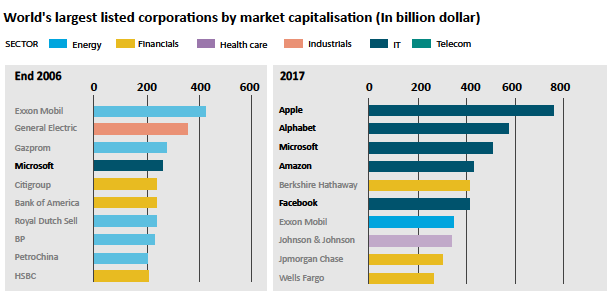
i) Digital technology has already transformed the world economy; the decade leading up to 2019, the largest 100 firms in the world had increased their total market capitalisation by US$12.7 trillion. A third of that increase (US$4.2 trillion) can be said to be accounted for by just seven firms: Facebook, Amazon, Apple, Alphabet, Microsoft (the famous quintet ‘FAAAM’), Alibaba, and Tencent as enabled and enhanced by digital technologies:
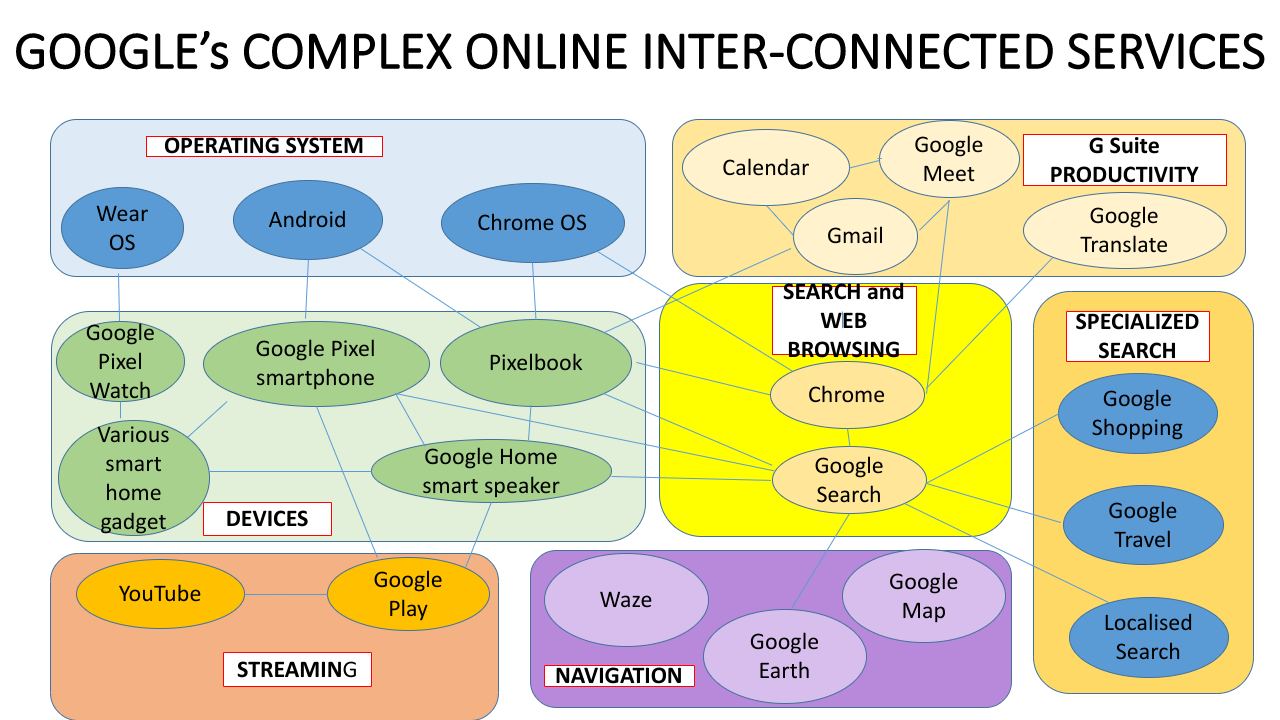
ii) A view of Google ecosystem shall give a better understanding of the wide breadth in span, spectrum and specialities of its activities in the digital marketsphere:
Other examples like Amazon’s marketplace or Apple’s Appstore cannot be treated as mere market players – instead, they are creating, and controlling, the entire marketspace: deciding which and when producers and consumers can access their respective markets, on what conditions, and – via algorithms – how the market operates. To be noted, too, is that new online business models like Facebook and Instagram increasingly merge social and commercial activity – and this trend is accelerating, (see Anreesen Horiwitz (2020),
Social Strikes Back).
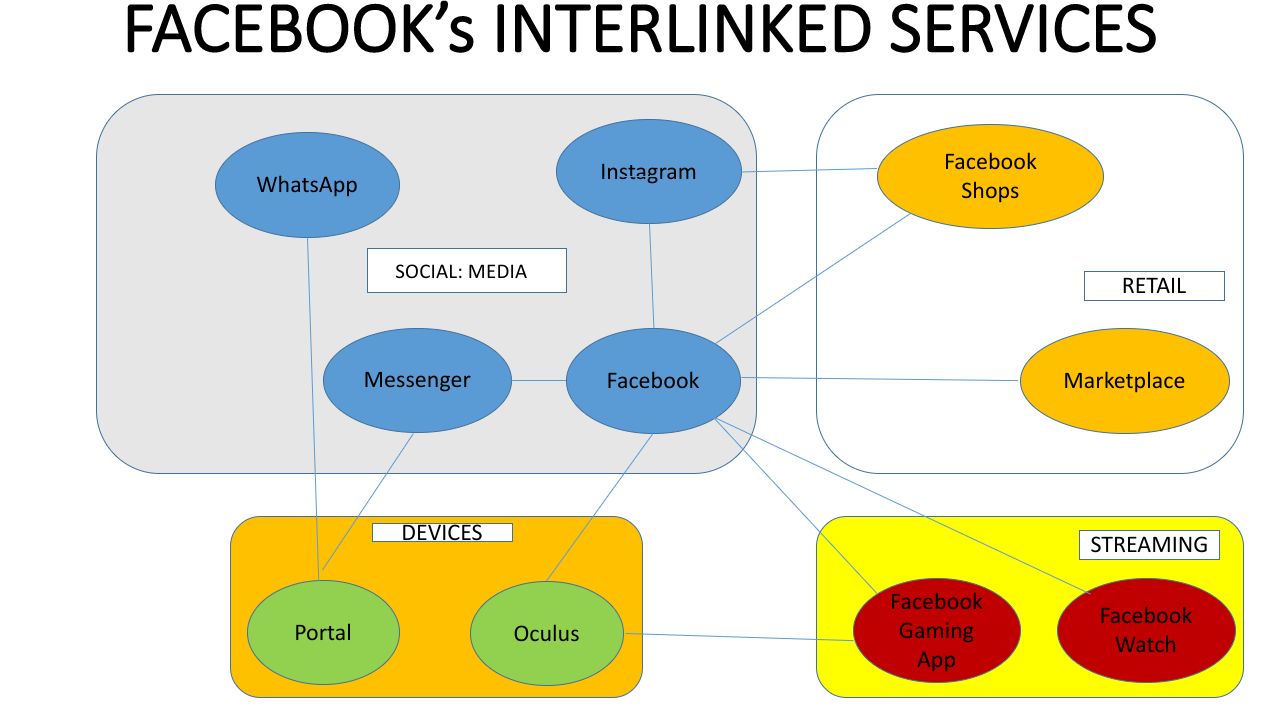
adopted from STORM 2021, Platform of Thrones
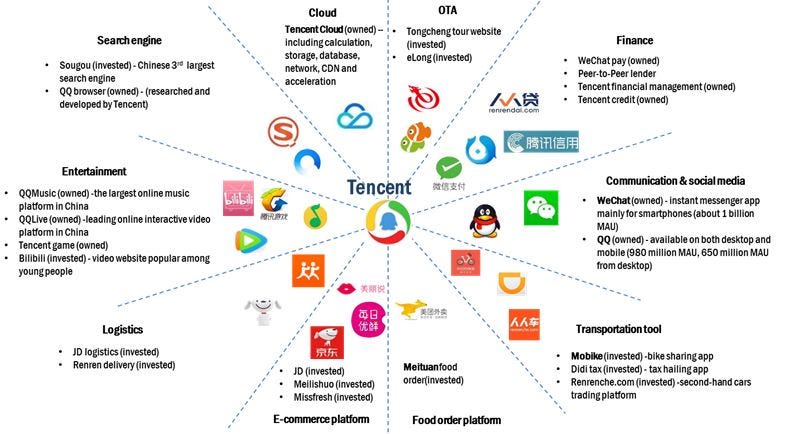
Other facts shall show that Google has some 90 per cent of the market for Internet searches. Facebook accounts for two thirds of the global social media market, and is the top social media platform in more than 90 per cent of the world’s economies. Amazon boasts an almost 40 per cent share of the world’s online retail activity, and its Amazon Web Services accounts for a similar share of the global cloud infrastructure services market. In China, WeChat (owned by Tencent) has more than one billion active users and, together with Alipay (Alibaba), its payment solution has captured virtually the entire Chinese market for mobile payments; Alibaba estimated to have close to 60 per cent of the Chinese e-commerce market.
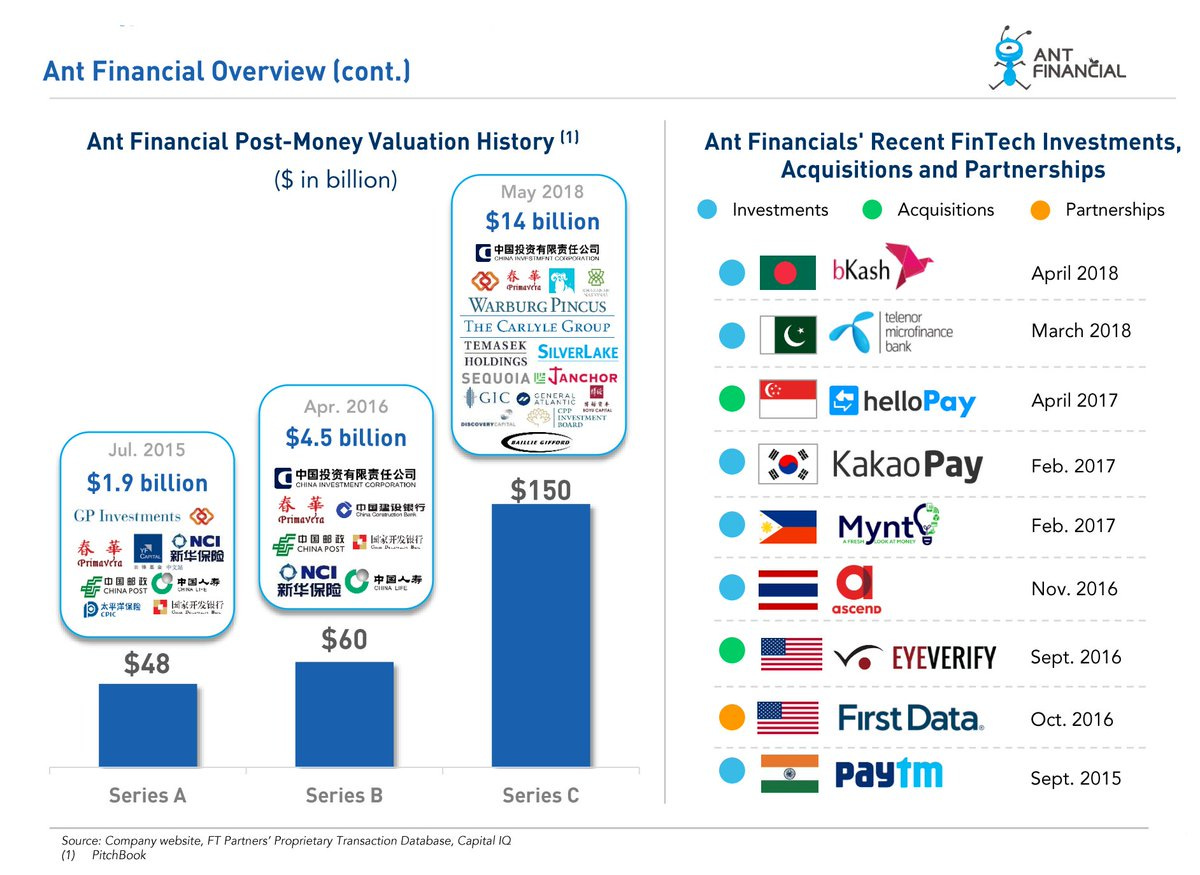
Alibaba-ALIPAY's Ant Fin-Tech conglomerate
iii) With ongoing surge in demand for infrastructural platforms’ services, now and in the near future, this means that cloud-based services across the world, and in SE Asia region in particular, are expanding, too. This demand for Big Data storage, massive processing and critical risk management of installed systems has prompted big corporates such as Google, Alibaba Group, Amazon Web Services (AWS) to expand their cloud infrastructure footprint widely in Malaysia during the last few years, (ChannelAsia 08 October, 2018; Nikkei 04 May, 2019; The Star 09 June, 2020).
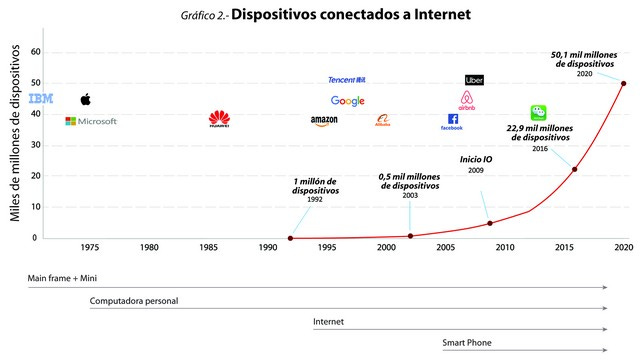
iv) Some of the input to the local Digital Infrastructure or DI is the physical medium, the infrastructure through which the traffic generated by the internet flows. This includes everything from telephone wires, cables (including optic fiber and submarine cables) to microwaves, satellites, and mobile technology such as fifth-generation (5G) mobile networks, IoT, and servers as well. On the server-side, major companies like Amazon or Microsoft stepped in to build and provide this growing digital infrastructure known as “the cloud”. Besides cables, cloud, and other things mentioned above, the data centers (hardware and software) and their administration is also a part of wide digital infrastructure work.
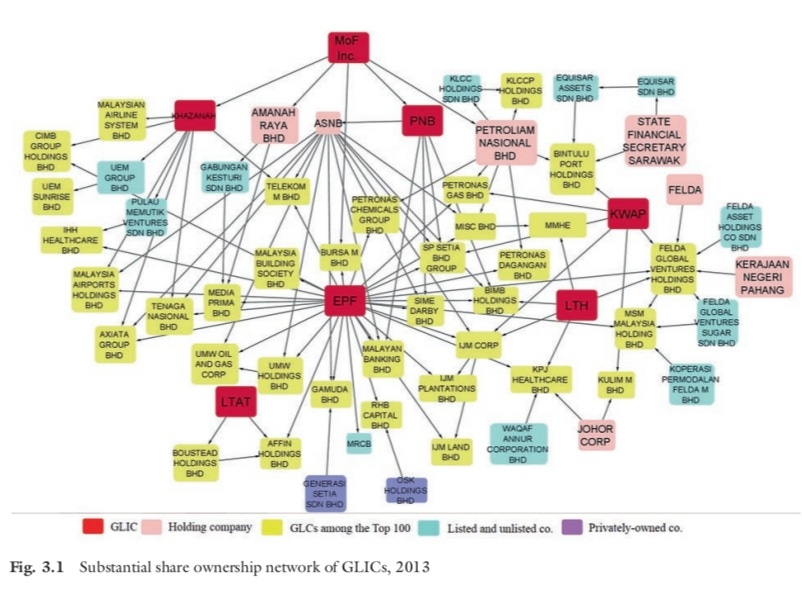
v) There is a growing centralisation of political and economic power in the Office of the Prime Minister and the Minister of Finance with a confluence of influence of the state over the GLCs that have the concentration of capital and accumulation of capital as Gomez laid out in Minister of Finance Incorporated: Ownership and Control of Corporate Malaysia, and more importantly, by offering higher dividend returns, cooperating closely with those local corporate capital that have connections to Global North monopoly-capitalists and by internationalising theoperations, they successfully link up electrical and electronic small manufacturing enterprises (SME) with products assembly, supplies and logistics competitiveness into the Global North supply chains.
First published in
STORM that includes other subsections:
Capitalism Encroachment
and
Capitalism Morphs
with additional graphs and embedded references